Edisto Beach: pair a forest question with a shore pause
Edisto Beach State Park offers a coastal day with an interior as well as an edge. Use its environmental interpretation and mapped forest trails to give a shore visit another dimension. The useful combination is one manageable inland activity and one suitable beach pause, rather than a race through every feature.
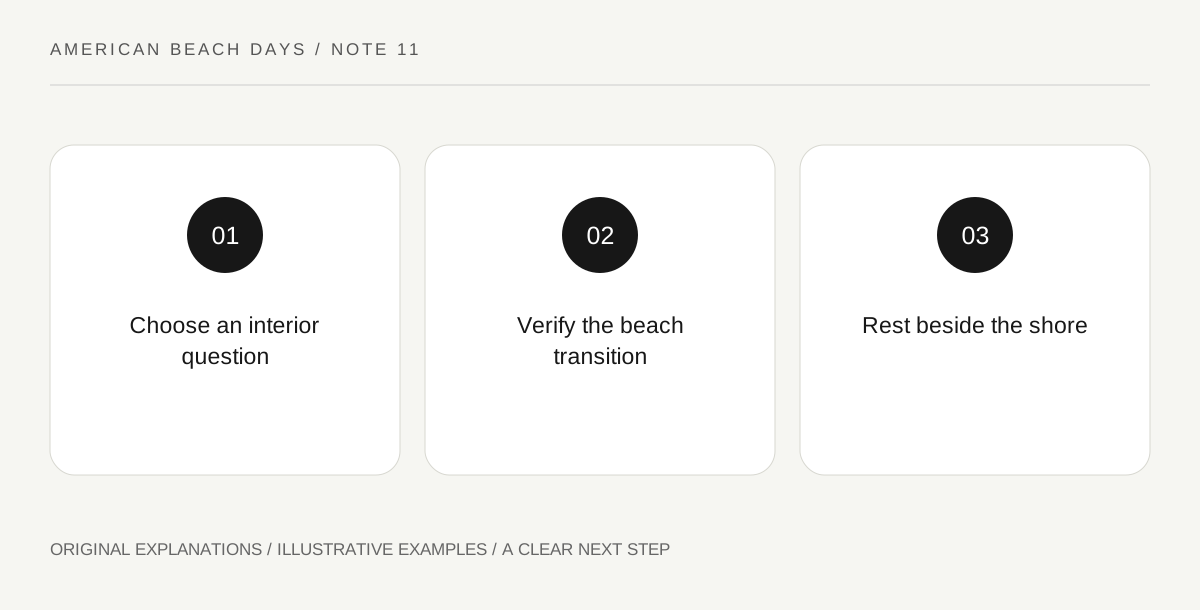
Original explanatory diagram. Read the full method and limitations below.
Start with the relationship
South Carolina State Parks describes trails through the maritime forest and an environmental learning center interpreting the wider ACE Basin. Choose a question connecting that setting to the shore: what changes between the wooded interior and an open coastal view? It is a question for observation and interpretation, not a reason to leave the established trail. Read the current map to understand how the selected activities relate before assuming you can simply step from one into the other.
Choose one interior segment
A park-wide total of trail mileage is not the distance of your particular walk. Select a named, open segment that suits the group and identify the point where you will turn or finish. Ask about the actual surface and access where those details matter. Carry what is useful for that activity without loading everyone with the full beach setup. If the learning center is central to your purpose, confirm its opening separately from the park’s general access.
Check the beach access you intend to use
The operator publishes notices about erosion and changes at particular beach accesses. Check the actual numbered or named access in your plan, not merely whether the park as a whole is open. A foot-access notice does not establish suitability for every visitor, and a temporarily unavailable assistance service can matter even when a beach remains reachable by others. Resolve that difference before unloading. Use another permitted, suitable plan if the selected transition cannot meet the group’s needs.
Make the shore pause a different experience
After the interior activity, use the beach portion for rest or a simple comparison of the landscape. It need not repeat the walk at greater length. Agree whether the second load should include chairs or whether the visit will stay brief. Decide any swimming separately using current conditions and posted directions. At departure, let companions describe the relationship they noticed; this makes the two settings parts of one day rather than two unrelated boxes ticked on a list.
An illustrative beach-day decision
Imagine a group choosing one forest-route segment and a beach pause afterward. They confirm that their intended public beach access suits a companion’s needs before leaving home. When an access notice changes the plan, they retain the interior activity and substitute a separately checked coastal viewpoint. This invented sequence illustrates keeping the day’s purpose while changing its route; it does not establish present access conditions.
Questions that come up
Does a park-wide accessible-trail description cover the beach approach?
No. They are different parts of the journey. Ask about the exact interior segment and the exact beach transition separately, including any current equipment or assistance arrangement you need.
Must the learning center be open for the visit to work?
Only if it is essential to your chosen purpose. An independently prepared observation walk can be a different valid plan, but do not promise a particular exhibit or program without confirming it.
References and scope
These sources support the factual background. Examples and exercises are original illustrative teaching material. References do not imply endorsement.
- South Carolina State Parks — Edisto Beach — Interior trails, environmental learning center and changing beach-access notices.