Face Rock: choose a viewpoint photograph before deciding on beach access
A coastal photograph does not always require reaching the sand. Face Rock State Scenic Viewpoint offers a way to separate seeing the rock formations from making a beach outing. Choose the image or observation you want from a permitted viewpoint first, then decide whether the additional beach route serves a different purpose.
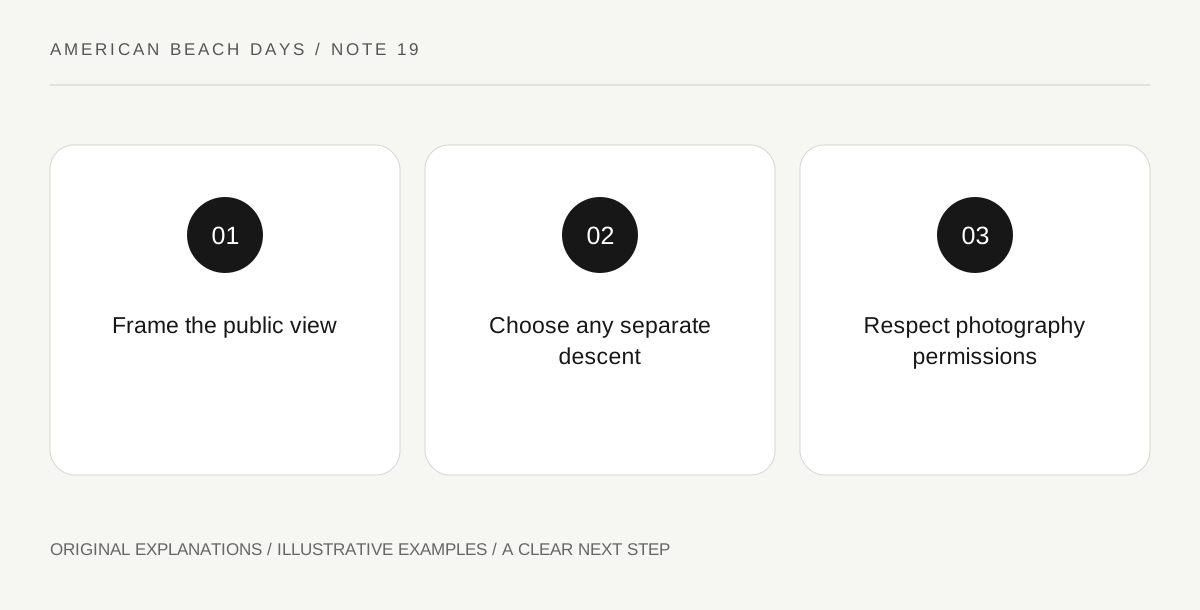
Original explanatory diagram. Read the full method and limitations below.
Start with the overlook experience
Oregon State Parks identifies Face Rock as a scenic viewpoint with beach access. Those are two related experiences, not one compulsory sequence. From an authorized public viewpoint, consider how the formations sit against the horizon and how much foreground belongs in the picture. A carefully chosen frame can provide a complete visit for someone who wants the coastal view. Do not assume a better photograph must be made from lower ground or a more exposed position.
Ask what the descent would add
If the beach remains part of the plan, check the current access route and conditions and identify its separate purpose. A modest permitted walk may offer a different sense of scale, but it also creates a return ascent and a surface transition. Discuss those requirements with the group before starting. The presence of beach access on a park page does not assess its suitability for every person, mobility device or weather condition at the time of the visit.
Respect the rock and wildlife setting
The operator explains that the offshore rocks and tidal flats have wildlife-refuge protection. Keep observation from permitted places and avoid approaching or disturbing wildlife for a closer frame. A longer lens or a smaller subject in the composition can be a creative choice without changing the visitor’s position. Do not interpret visible low-tide ground as permission to enter every area. This article does not provide an intertidal exploration route or a tide-based access instruction.
Keep special photography arrangements separate
The park publishes specific information about day use, drone restrictions and night-photography permission. Read current requirements before planning an activity beyond an ordinary daytime visit. A daylight parking arrangement is not automatically authorization for remaining after the usual period, and a photography interest does not create an exception to wildlife protection. Build the trip around the permission you actually have. If the intended specialist session cannot be arranged, use a suitable daytime view or choose another date.
An illustrative beach-day decision
Imagine two visitors whose main goal is a coastal photograph. They first work from the permitted viewpoint and decide that the composition already meets their purpose. They omit the beach descent because it adds a return climb without a distinct desired activity. Their next visit may be different. This invented example is about choosing a viewpoint, not today’s trail status, tides, parking permission or an assessment of safe shoreline conditions.
Questions that come up
Does an accessible viewpoint guarantee an accessible beach route?
No. They are different parts of the site. Ask about the precise route and the individual’s needs rather than extending the viewpoint’s description to the descent, sand or return.
Can a visitor stay late just to finish a photograph?
Follow current operating and permission requirements. The park describes a separate night-photography process; an ordinary daytime visit does not automatically provide that authorization or override other restrictions.
References and scope
These sources support the factual background. Examples and exercises are original illustrative teaching material. References do not imply endorsement.
- Oregon State Parks — Face Rock — Viewpoint and beach access, protected rocks, day-use and photography conditions.