Fort De Soto: choose the right area for the people and the dog
A dog-friendly park is not necessarily a park where a dog can accompany every beach activity. Fort De Soto has distinct swim centers, a designated dog-beach area and other visitor destinations. Build the outing around the actual group, including its animal companion, before choosing where to spread out.
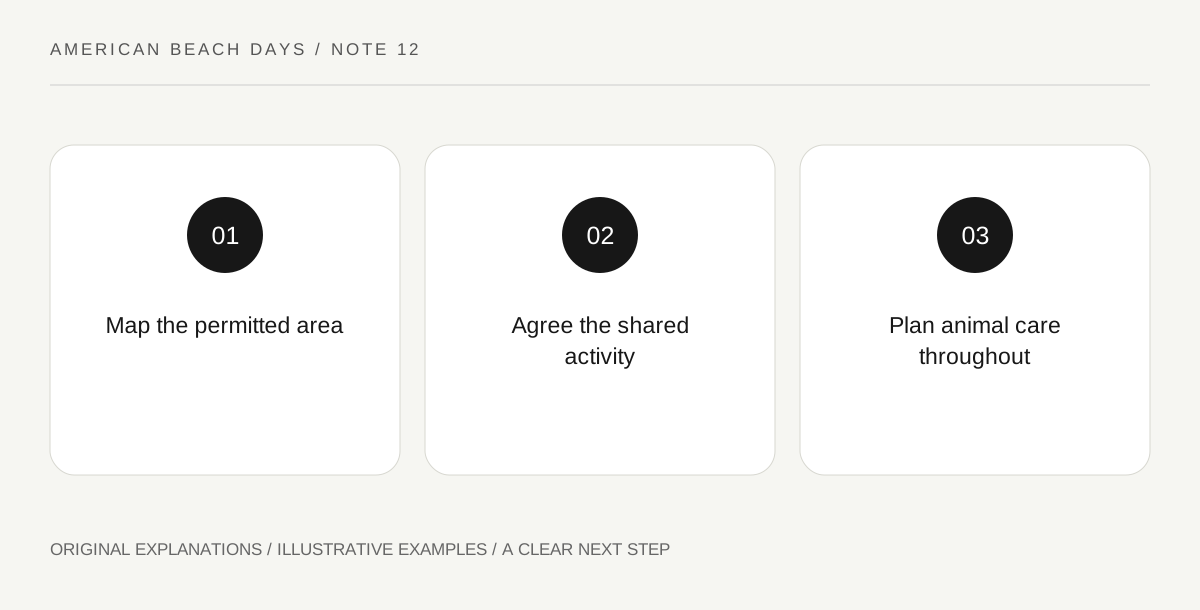
Original explanatory diagram. Read the full method and limitations below.
Put the dog’s permitted area on the map
Pinellas County identifies a designated dog-beach area beside the dog park, separate from the North and East Beach swim centers and historic facilities. Read the current rules and diagram rather than extending permission from one area to every shoreline. If the dog is part of the outing, choose a permitted destination that fits that reality. A broad search result describing the park as dog friendly is not a substitute for the boundary of the actual area.
Ask what the humans want to do
Some companions may want a dog outing, while others imagine a quiet seated beach session, historic interpretation or a different swimming area. Discuss these interests before arrival. One coherent plan can be enough, but a split plan needs an agreed meeting point and a responsible arrangement for the animal throughout. Do not assume somebody will wait in the vehicle or improvise animal care while the rest of the group visits a restricted facility. Count that responsibility as part of planning.
Avoid treating the paved trail as a shortcut to permission
The park’s diagram and recreation information show connections among several areas. A connected route does not make every destination open to every use. Check the rules for the actual path and endpoint, especially if combining the dog outing with another activity. Choose permitted public ways and keep entrances clear when the group pauses to reorganize. A large park offers choices; it does not remove the need to understand which choice you are making.
Keep the return practical
Bring a way to contain sandy or damp equipment and the supplies required to care for the animal responsibly. Check current facility notices before relying on any wash or concession service. Decide whether everyone returns together or reunites before reaching the vehicles. A dog-focused beach outing can be complete without adding another swim center afterward. If people want a separate non-dog beach experience, arrange it as a different visit rather than creating an unresolved care problem at the end of this one.
An illustrative beach-day decision
In an invented group plan, two friends and a dog make the designated dog area their shared destination. A third friend saves the historic fort for another day because the group does not have a suitable animal-care arrangement for a split visit. They check the actual area rules and keep cleanup supplies in one bag. The example explains choosing a compatible outing, not current access or any individual dog’s behavior.
Questions that come up
Does the dog beach mean dogs are allowed at both swim centers?
No. These are distinct areas. Follow the current county rules and posted boundaries for the specific place rather than assuming one permission applies across the park.
Should a group split up to fit every interest?
Only when the transport, meeting and animal-care arrangements are explicit and suitable. A simpler shared outing or separate future visit can be more workable than trying to combine incompatible destinations.
References and scope
These sources support the factual background. Examples and exercises are original illustrative teaching material. References do not imply endorsement.
- Pinellas County — Fort De Soto — Different swim centers, designated dog beach, historic area and park map.