Galveston Island: make the bay and the beach answer different interests
Galveston Island State Park has both beach and bay settings, which can support a thoughtful short visit or an overfilled itinerary. Give each proposed activity a reason. A Gulf-side pause and a bay-side habitat observation may complement one another, but two separate water activities create a very different day.
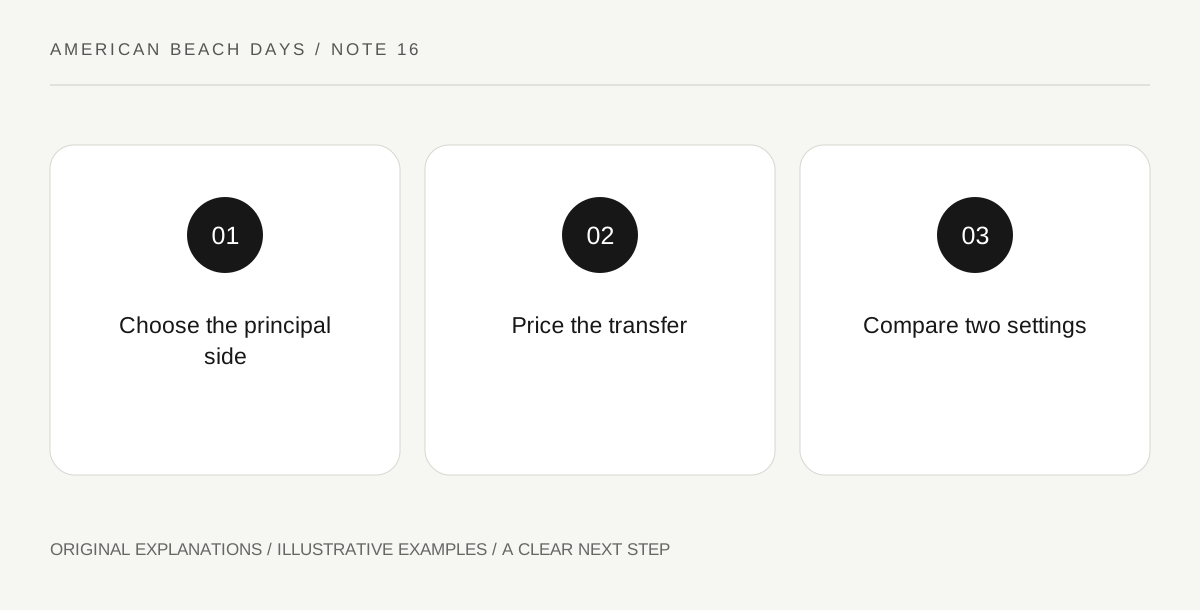
Original explanatory diagram. Read the full method and limitations below.
Choose the principal side
Texas Parks and Wildlife distinguishes the park’s beach and bay sides and provides maps for trails and activities. Decide which side contains the main reason for your visit. Write its actual public arrival point in the shared plan rather than relying on the island’s name. If staying overnight, verify which side the reservation belongs to. An accommodation label and a desired day-use activity can be geographically related without sharing the same access or immediate surroundings.
Give the other side a different role
If the main visit is a beach pause, a selected bay-side observation route can introduce a different habitat rather than repeating a second sitting stop. If the main interest is the bay landscape, an ocean view might serve as the brief contrast. Use the current official trail map to select a suitable public route. Do not treat a paddling trail as an ordinary walking connection or assume an attractive waterway can be used without separate preparation and current conditions checks.
Inspect the practical transition
Count the movement between the selected places: returning to the vehicle, repacking and finding the next permitted access. Make sure the transfer improves the day for everyone present. The park describes beach wheelchairs as not self-propelled and directs visitors to ask for details. That is a useful example of why equipment information needs an assistance discussion. Confirm the actual arrangement and route before relying on it, rather than adding an access feature to the notebook as though it completed the whole journey.
Finish with one comparison
Before departure, ask what changed between the two settings: the view, the vegetation, the sense of exposure or the visible human activity. Keep the answer observational rather than inventing an ecological explanation without evidence. If time or access allows only the principal side, the day still fulfills its main purpose. The second side was an additional perspective, not a test that every visitor must pass to claim a complete island experience.
An illustrative beach-day decision
In an invented outing, friends choose a Gulf-side shore pause as the main event and a short, suitable bay-side observation as an option. They keep the transfer explicit and leave paddling for a separately prepared visit. When one companion wants a longer rest, they remove the optional stop and retain the main day. This example does not describe today’s trail, equipment or water conditions.
Questions that come up
Does a park campsite automatically place me by my chosen beach activity?
No. Read the reservation’s actual location and current park map. The beach and bay settings support different experiences, so accommodation and day-use destinations should be checked independently.
Can one equipment listing answer all access questions?
No. Ask about availability, the actual route, handling and assistance. A beach chair or accessible feature provides part of the information; suitability depends on the individual and the complete outward and return journey.
References and scope
These sources support the factual background. Examples and exercises are original illustrative teaching material. References do not imply endorsement.
- Texas Parks and Wildlife — Galveston Island — Beach and bay sides, habitat trails and beach-chair assistance information.